World’s Longest Wild Snake Found in Indonesia: a 7.22-Metre Female Reticulated Python
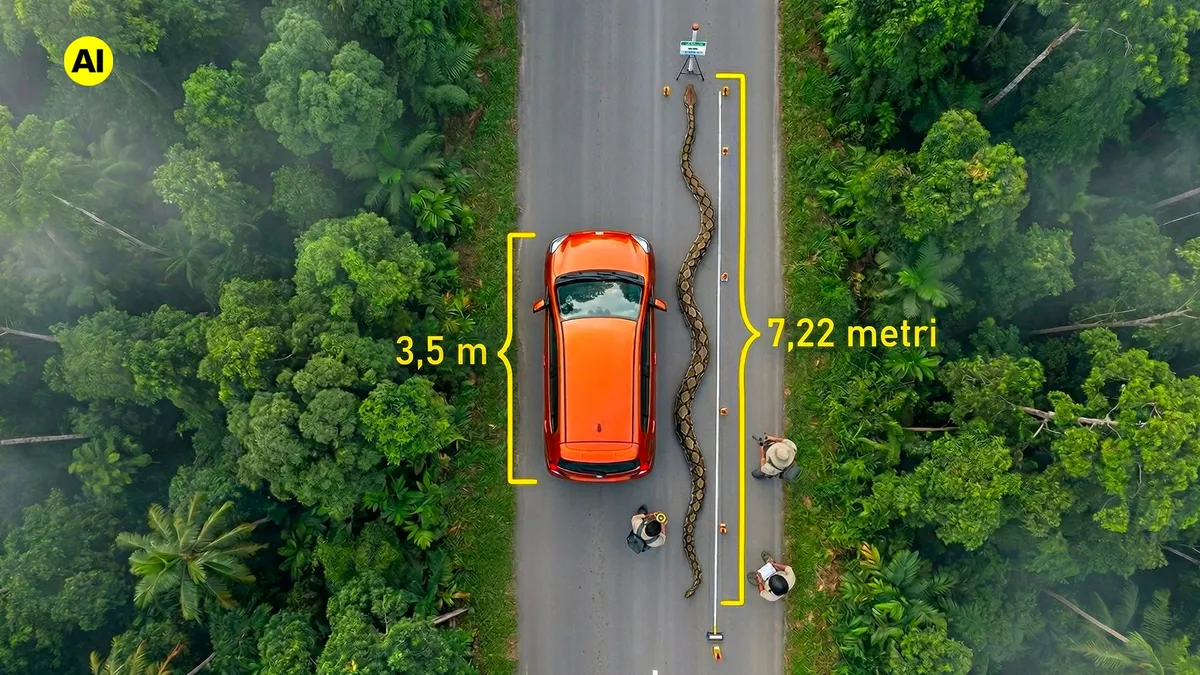
The discovery of “Ibu Baron”, a reticulated python, is now recorded as the longest wild snake ever documented. Officially measured at 7.22 metres, her length is recognised by the Guinness World Records. Found in the jungles of Sulawesi, Indonesia in late 2025, the specimen expands known size limits for the species and has implications for understanding habitat and adaptation.
Impressive measurements and how they were taken
“Ibu Baron”, nicknamed “The Baroness” in English, is a female reticulated python, scientifically named Malayopython reticulatus. Her size is notable in both length and mass: she weighed 96.5 kg with an empty stomach. The team measured her without sedation to avoid the risks of anaesthesia. Scientists estimate her relaxed length could be around 7.90 metres, because muscle relaxation can add up to 10% more in length. That is roughly the length of a camper van or two small cars parked end to end.
A new record and the history behind it
The official measurement took place in January 2026, establishing a new record for wild pythons. The previous record was 6.95 metres, recorded on Borneo in 1999, so this find is about 0.25 metres longer. Captive specimens can be larger: for example, “Medusa”, a reticulated python in Missouri, USA, is known to reach 7.67 metres.
Where they live, how they adapt and what they eat
Reticulated pythons are native to South-east Asia, occurring in countries including Bangladesh, Indonesia, the Philippines, and parts of India. These non-venomous constrictors are adaptable and inhabit tropical rainforests, swamps, plantations and some urban areas. They are opportunistic predators with a varied diet of mammals, birds, reptiles, amphibians and fish (they are competent swimmers). Occasionally they enter human settlements in search of food, taking livestock, domestic animals and, rarely, people.
Why conservation matters amid human threats
Despite their adaptability, reticulated pythons are threatened by human activities. They are frequently killed when encountered near settlements and are hunted for their skins and for use in traditional medicines. The documentation of “Ibu Baron” draws attention to these pressures and to the species’ ecological roles, which are often misunderstood by local communities.
Why people are so interested
“Ibu Baron” has attracted attention in both scientific and public circles. Records of this kind increase awareness of the species and may inform conservation and management. Further research and monitoring will clarify the circumstances of the record and its implications for the species and its habitats.