The snapshot of a lynx in Spain that captivated the world in 2026 and won the “Wildlife Photographer of the Year” award
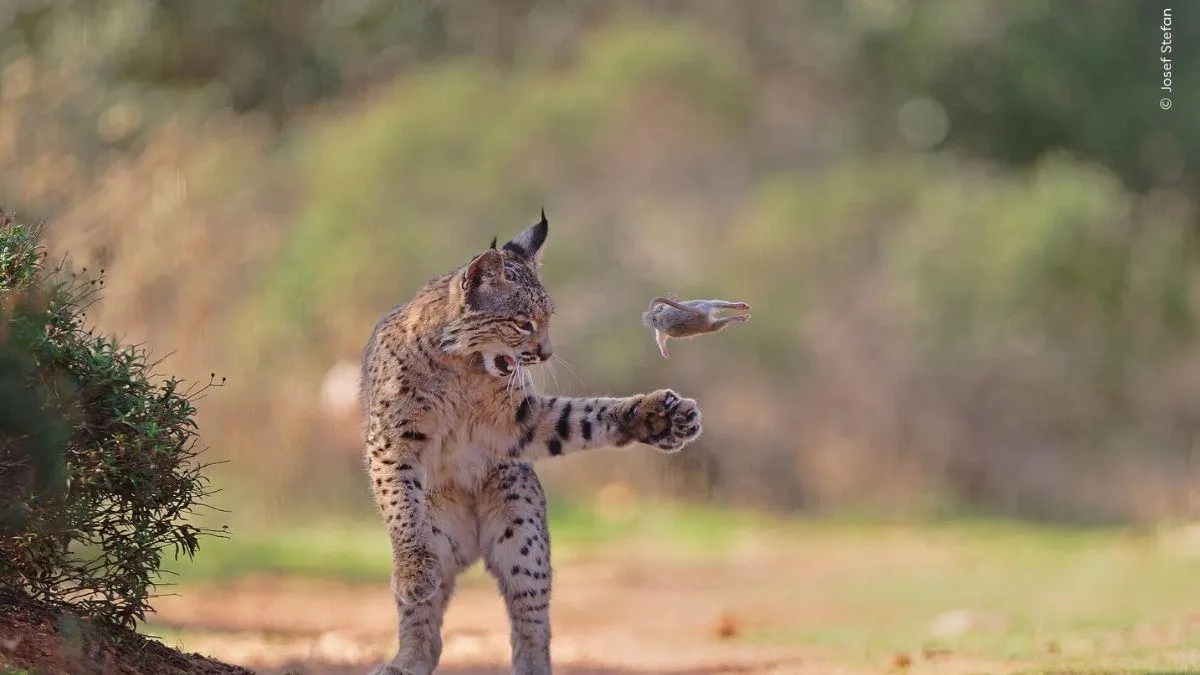
The photograph “Roedor volador” (translated: “Flying Rodent”), taken by Austrian photographer Josef Stefan, won Wildlife Photographer of the Year 2026. The image shows a young Iberian lynx playfully throwing a mouse into the air, a fleeting moment of instinctive play. Chosen from over 60,000 submissions and backed by the public through the People’s Choice Award, the win recognises the shot’s artistry and drew attention to wildlife conservation and public awareness.
A playful moment in the Spanish countryside
The photograph was taken in the area of Torre de Juan Abad, in the Province of Ciudad Real, Spain. It captures a young Iberian lynx in a private, playful hunting moment. Stefan’s picture, described as striking and simple, also conveys a broader story about wild nature. The scene lasted only a few minutes but illustrates the balance between predator and prey.
How the shot came about
Austrian photographer Josef Stefan, who was already familiar with Spain, called this trip especially meaningful. Using a Nikon with a 600 mm telephoto lens, a long lens for shooting from a distance, Stefan spent two weeks in different parts of Spain searching for the elusive Iberian lynx. His dedication, built on hours of patience, supports his belief that “patience is the real secret beyond equipment.” In an interview with Condé Nast Traveler, Stefan added, “Nature photography can raise awareness, draw attention to endangered species and, therefore, promote their protection.”
The Iberian lynx and a conservation comeback
The lynx in Stefan’s photo is more than a subject; it represents a recovery effort. In the early 2000s, the species was on the brink of extinction with fewer than 100 individuals, making it the world’s most threatened felid at the time. Thanks to coordinated conservation efforts, including programmes like LIFE Iberlince, the population rose to more than 2,400 individuals across Spain and Portugal by 2025. Measures have included reintroducing lynxes into former habitats, improving landscapes, and boosting prey numbers by helping the European rabbit population recover.
Threats remain and why photos matter
Despite this recovery, the Iberian lynx is not secure. Road collisions, habitat loss, and food shortages remain serious threats. Images like Josef Stefan’s help communicate these issues to the public and can support conservation work. As Stefan put it, “This is one of the most threatened species of felids in the world, and that was precisely what attracted me. It was a great challenge, because it is extremely shy and difficult to find.”
The lynx’s recovery from the edge of extinction remains a focus of conservation efforts. Photographs that highlight biodiversity’s fragility can prompt public engagement in conservation. Effective action is needed to preserve both the species and its habitats.