The brilliant trick to make white residue on your hob vanish
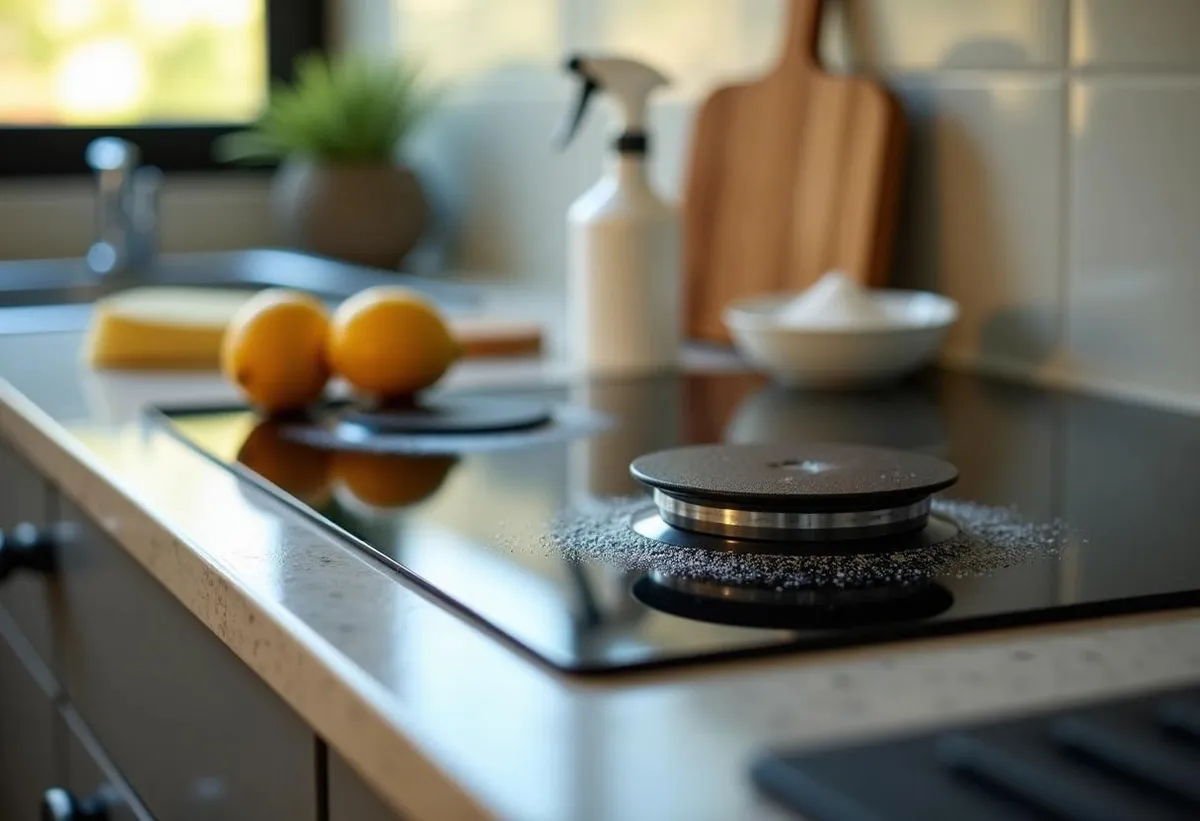
Daily cooking often leaves pale whitish rings and limescale on cooktops. This is especially true for induction and glass-ceramic hobs. The problem affects appearance, durability and hygiene. Knowing safe, effective cleaning methods helps home cooks keep a gleaming kitchen without resorting to harsh chemicals.
The daily challenge of keeping your cooktop clean
Induction and glass-ceramic hobs look sleek and cook well, but they are a bit high-maintenance. Regular cooking leads to splashes and leftover residue, which can form persistent whitish calcium deposits. These come from minerals left behind by water and food and soon spoil the finish.
Vigorous scrubbing can scratch and dull the surface and make stains return sooner. Sticking to gentle cleaning methods preserves the finish and helps the cooktop last longer.
Lemon and baking soda: a natural clean
A simple, natural remedy is lemon and baking soda. Lemon, with its acidity, breaks down calcium deposits without damaging the hob. Baking soda provides a mild abrasive action that lifts grime and limescale gently.
Cut a lemon in half and rub it over the marks so the juice does its work. Then sprinkle baking soda over the damp area and leave it for 5 to 10 minutes. Use a non-abrasive sponge (for example, a soft kitchen sponge rather than a metal scourer) to wipe the surface gently, and finish by rinsing with clean water. This routine cleans without chemicals.
This method is safe for surfaces that come into contact with food when used carefully, and it keeps cleaning straightforward and low-risk.
White claystone for tougher marks
For baked-on or more stubborn stains, white claystone is effective. You can find it at most organic or speciality stores. Applied with a slightly damp sponge, it clears persistent residues without compromising environmental values.
As an alternative, you can make a homemade claystone from Marseille soap and baking soda, which delivers similar results. This DIY option is cost-effective, environmentally friendly and practical, and is a useful extra tool against cooktop grime.
Keep on top of it with regular maintenance
Adopting regular cleaning habits prevents deposits from hardening in the first place. Wiping the cooktop with a damp cloth after each cooking session significantly reduces limescale build-up and makes deep cleans less frequent.
Using natural solutions such as lemon, baking soda and white claystone makes maintenance straightforward and reduces the need for harsh chemical products, keeping the kitchen more sustainable.
Cooktop cleaning does not have to involve strong chemicals or risk of damage. Used gently and regularly, these natural methods restore shine and reduce reliance on harsher cleaners, helping maintain a cleaner, greener cooking space.