Scientists bore record-breaking 228-metre core from deep beneath West Antarctica
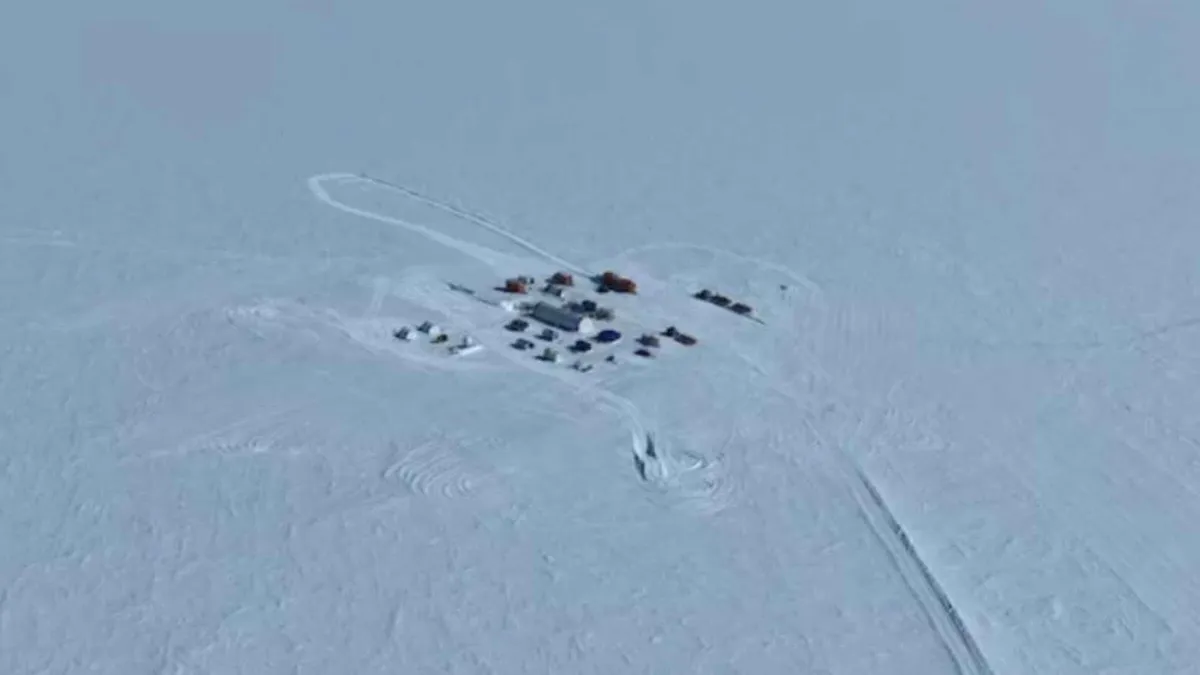
The SWAIS2C project has reached a milestone in Antarctic research by drilling a borehole at Crary Ice Rise in West Antarctica and retrieving a 228 m core of rock. The work is led by Earth Sciences New Zealand, Te Herenga Waka Victoria University of Wellington, and Antarctica New Zealand. The core has been described as the deepest sample of its kind ever retrieved and could provide information relevant to past climate and sea-level changes. Antarctica New Zealand announced the result in a press release.
Drilling into Earth’s history
The drill site is more than 700 km from Scott Base (the New Zealand research station on Ross Island), beneath 523 m of ice, a remote, challenging site with significant scientific value for reconstructing past environments. The team first used a hot water drill to melt through the ice, then switched to a customised drilling system that recovered core sections up to 3 m long.
The sediment core provides a geological timeline. Preliminary dating suggests it records conditions going back 23 million years. The layers range from coarse gravel with larger rocks to finer mud packed with shell fragments and tiny marine remains. Those remains indicate organisms that once lived in the light — evidence that open water once covered this part of Antarctica.
Seeing how climate and sea level linked up
The sediment record shows periods when West Antarctica was not fully glaciated and was exposed to the open ocean, implying warmer climates than at present. That is relevant to understanding the West Antarctic Ice Sheet (WAIS), which contains enough ice to raise global sea levels by about 4 to 5 m if it were to melt entirely.
The Ross Ice Shelf acts as a buffer, slowing glaciers as they flow towards the ocean and helping to stabilise the system. Satellite data show the ice sheet has been losing mass faster in recent decades. Predicting when and how far that retreat will proceed remains uncertain, so the core can help improve the computer models used to project future sea-level scenarios. Those projections matter for coastal cities, ports and flood planning.
Filling the knowledge gap
The new data address a gap identified in a 2022 Scientific Drilling paper, which called for direct evidence from beneath the West Antarctic interior. Until now, most work focused on coastal and offshore records, which provide only part of the picture. Scientists from 10 countries are helping to refine the core’s dating and carry out detailed analyses. The project therefore provides a previously missing source of information on interior ice-sheet behaviour.
Researchers, including Huw Horgan and Molly Patterson, have welcomed the results. Horgan said that “the earliest signs suggest the archive includes periods from the past 23 million years” and will provide “critical insights” into Antarctica’s response to warmer climates. Patterson pointed to the marine remains as “a strong sign that open water once existed overhead.”
Laboratory work is ongoing to pin down the exact age and composition of each layer. Researchers expect the findings will improve predictive models and give more accurate forecasts of how Antarctic ice might behave under future climate scenarios. Those results could inform climate policy and planning for ecosystems and infrastructure around the world.