Questions emerge about the rubber material sealing underwater tunnels
Questions have been raised about the lifespan of undersea tunnels after a study by engineers at Shijiazhuang Tiedao University (STDU) in China. Their analysis, published on 28 March 2026 in the journal Tunnelling and Underground Space Technology, shows that the GINA gasket, a rubber seal designed to keep undersea tunnels watertight for at least 100 years, may not behave as expected under real conditions. The results indicate that loss of sealing force, rather than surface wear, is a key factor.
What the study found about sealing force and pressure
The team tested GINA gasket samples taken from the Yuliangzhou tunnel in China. Under realistic pressure and seawater conditions, the gaskets lost 67.66% of their sealing force relatively quickly. The researchers forecast the sealing pressure after 100 years to be 1.51 MPa (approximately 219 psi), down from 2.32 MPa (around 336 psi) reported in an earlier seawater-only experiment by the same group. Despite that drop, the projected pressure still exceeds the critical waterproofing index of 0.61 MPa (roughly 88 psi), leaving a safety margin.
How tunnel joints are built, and how they break down
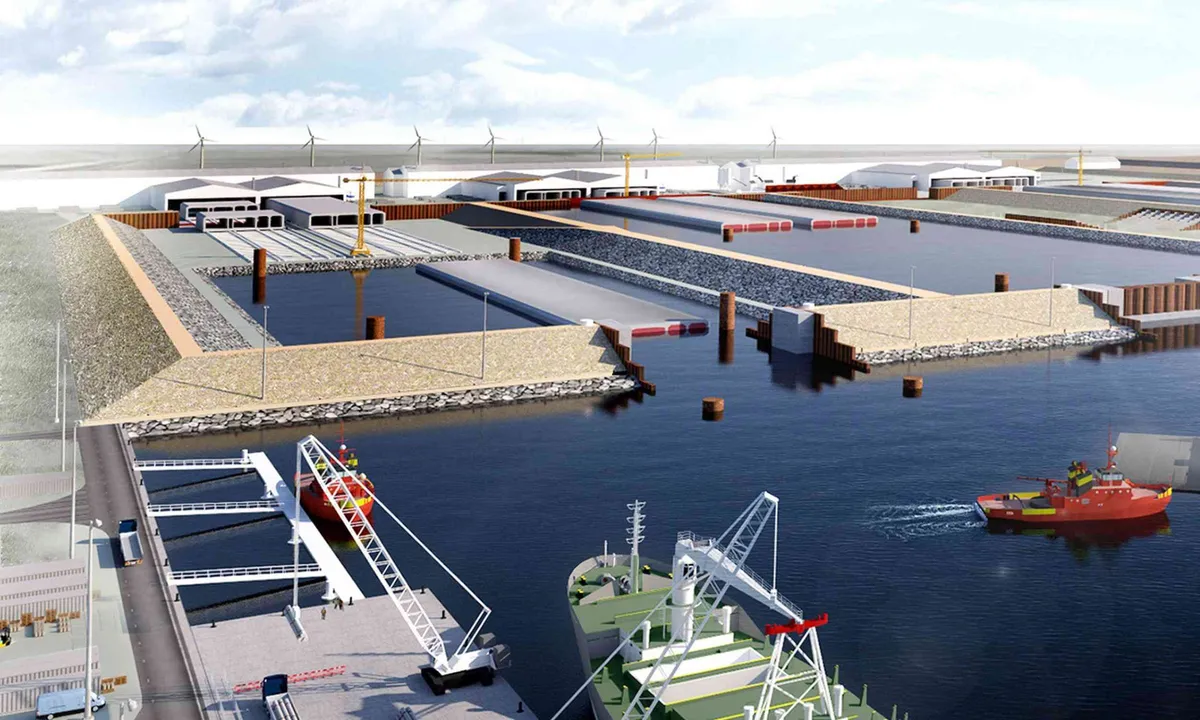
Undersea tunnels built by the immersed method use prefabricated sections that are floated into place, lowered and joined underwater. Seals such as the GINA gasket are squeezed between steel faces so contact stress keeps water out. Over time the seals change both mechanically and chemically.
The GINA gasket samples showed an increase in hardness of 14.18% and in density of 5.88%, plus a stiffening temperature shift of about 3.2 °C. Mechanically, the rubber hardened and the surface became rougher, with degradation moving from the outside in. Chemically, saltwater and oxygen broke long molecular chains into shorter pieces, reducing flexibility and damaging the elastic network. The authors suggest adjustments to rubber formulations and compression targets, and targeted inspections, particularly around the lower gasket edge, to manage these effects.
Maintenance and risk challenges
A main problem flagged by the study is spotting the hidden loss of sealing force before visible damage shows up. The bottom edge of the gasket was identified as the weak spot and is especially prone to leaks because of lower pressure there. Joint geometry matters too: gaps over 47 mm and segment rotation can make leaks worse by changing how the seal sits and how pressure is distributed across the joint.
The research points to the need for revised maintenance schedules and inspection methods. Focusing on pressure retention rather than only on surface checks should help teams predict when seals might fail before obvious deterioration appears. The study’s near-real-world testing (combining compression and seawater exposure) provides practical guidance for future tunnel design and upkeep.
The results suggest that tunnel owners, engineers and maintenance teams should reassess durability claims and maintenance timetables for undersea tunnels. Rather than relying solely on a fixed design life, operators may need maintenance-driven approaches to preserve safety and function. The study suggests further examination of undersea tunnel materials to improve resilience to environmental exposure and support infrastructure reliability.