Is It Safe to Clean Your TV Screen with Glass Cleaner?
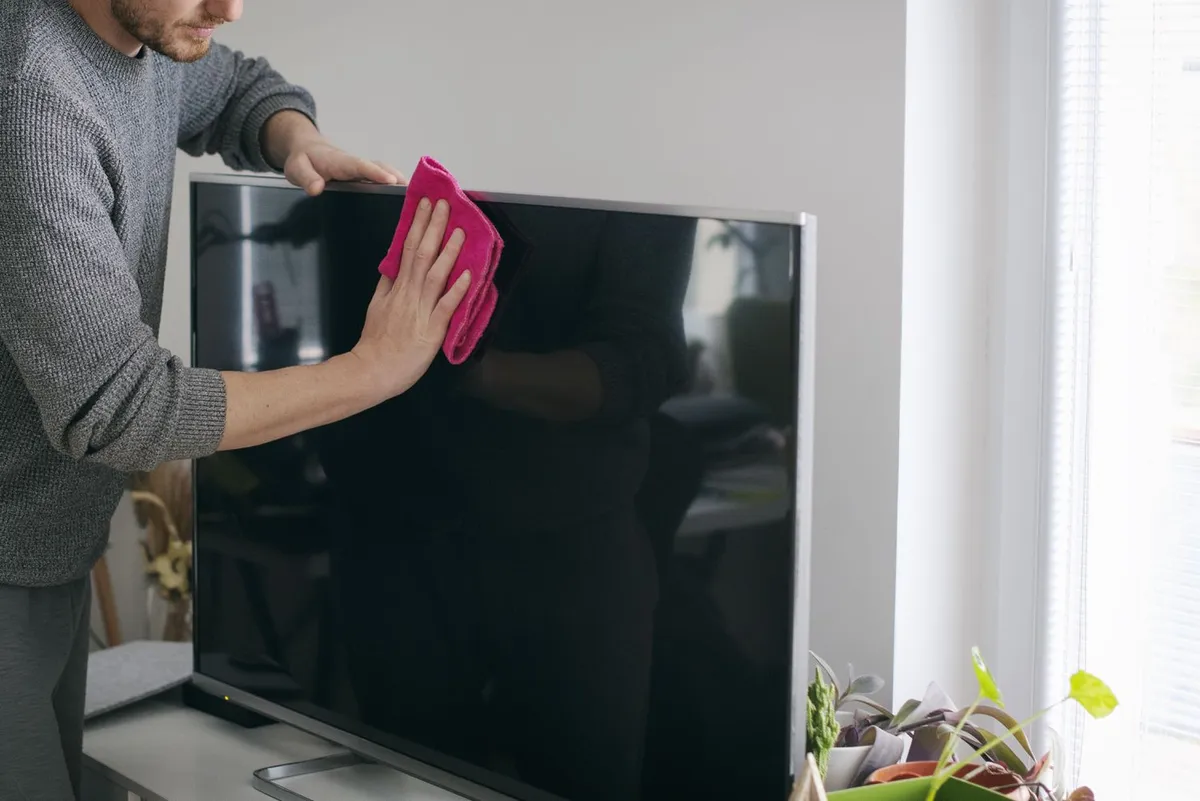
If you want to remove streaks, smudges and fingerprints from a TV screen, it may seem logical to reach for a bottle of glass cleaner. That can be risky and may cause permanent damage. This explains why glass cleaner can go wrong and offers safer alternatives for cleaning your screen.
What the screen is made of and what the makers say
It’s easy to assume that because a flat-screen TV has a glass element, a glass cleaner (like Windex) will do the job. That assumption is misleading. Even if parts of your TV look like glass, using a glass cleaner can permanently damage the surface. TV manufacturers such as Samsung specifically warn against using glass cleaners on TV screens.
Samsung advises, “You should not use window cleaners, soap, cleaning powders, or chemicals used to clean glass, such as alcohol, benzene, or ammonia. Because LCD screens have very soft and sensitive surfaces, these powerful chemicals can cause permanent damage to your TV screen.”
The risks of harsh chemicals
Using the wrong cleaning products can cause permanent streaks, smudges or discoloured patches that spoil the picture. For LCD screens, which Samsung describes as having “very soft and sensitive surfaces,” incorrect cleaning can shorten the screen’s usable life. The cleaning-advice provider HG also warns strongly against using products such as Windex, vinegar and methylated spirits, because they contain aggressive chemicals that can ruin the screen’s delicate coating.
- Avoid household cleaners in general: cleaning powders, all-purpose cleaners, solvents and even rubbing alcohol or distilled vinegar should be off-limits unless the manufacturer explicitly says they are safe.
Safer ways to clean your TV screen
Keeping it simple is the safest route. For routine cleaning, use a soft, dry microfibre cloth to dust the screen. If fingerprints or stubborn marks remain, lightly dampen the cloth with distilled water (distilled water has no minerals that could leave deposits).
If you need something stronger, use a cleaner approved by the TV maker. Be cautious with commercial “screen cleaners”, as not all are safe for every flat-screen. Always spray or apply the cleaner to the cloth, never directly onto the screen, and use gentle pressure when wiping to avoid stressing the surface.
Understanding what your TV is made of and following the manufacturer’s advice will help preserve picture quality over time. A quick glass-cleaner fix may seem convenient, but the risk of permanent damage is not worth it. Choosing safer cleaning methods helps keep your TV free of distracting marks and gives you the best chance of good picture quality for longer.
Following these steps reduces the chance of costly repairs and helps keep the screen free of distracting marks, so the picture quality lasts longer.