After Hundreds of Years of Decline, Researchers Discover the Optimal Way to Revive Oyster Reefs
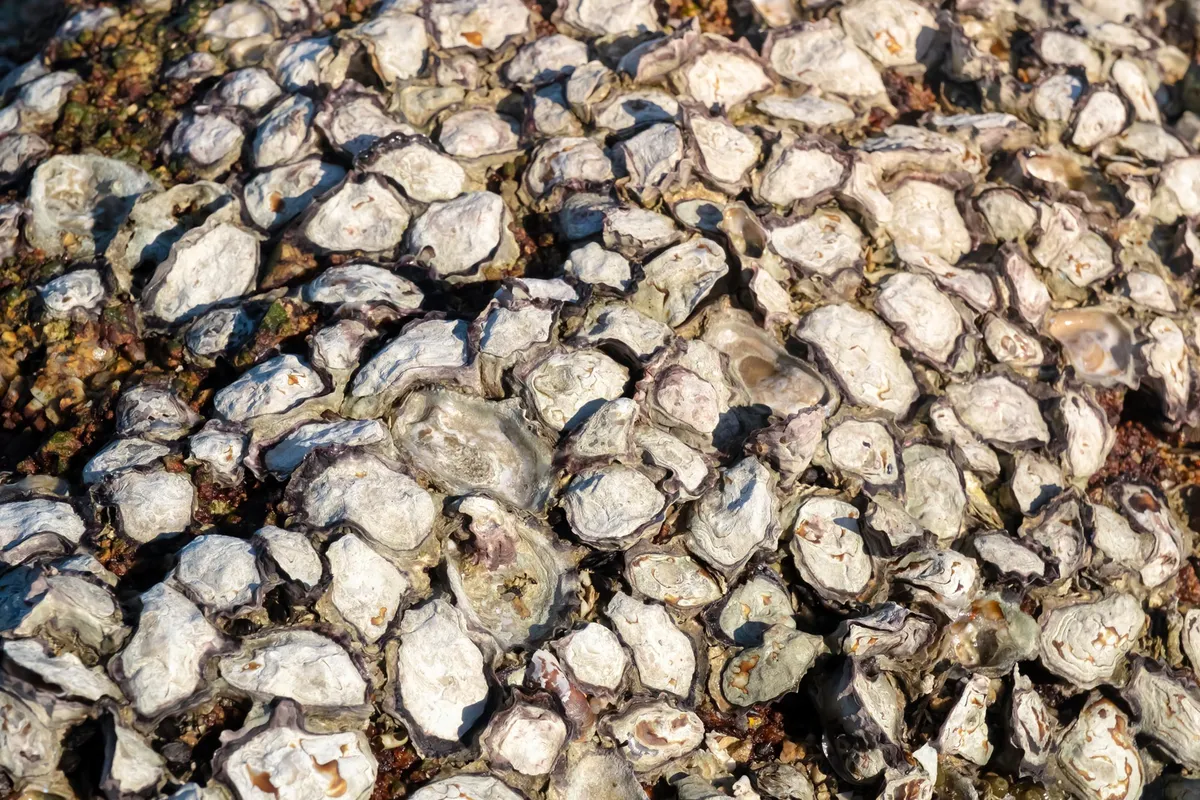
A study titled “The natural architecture of oyster reefs maximizes recruit survival”, published in Nature on 18 February 2026, shows how natural reef shapes can guide restoration. Led by Dr Juan Esquivel-Muelbert from Macquarie University, the international team’s work provides practical guidance for improving oyster reef restoration projects around the world.
How reef shape helps young oysters
Oyster reefs are ecosystem engineers, as Dr Juan Esquivel-Muelbert notes. The study shows these reefs are finely tuned 3D systems, not just piles of shell. The particular shapes and spatial layouts found in natural reefs strongly affect where juvenile oysters settle, how well they survive and how they avoid predators.
Researchers used high-resolution 3D photogrammetry (a method that builds 3D models from many photographs) to map surviving Sydney rock oyster reefs, Saccostrea glomerata, in the greater Sydney area. They then attempted to copy those complex geometries using concrete tiles designed to mimic natural features.
Sixteen tile types, differing in ridge number and height, were tested at estuarine sites including Brisbane Water, Hawkesbury River and Port Hacking. Some tiles were protected by cages to exclude predators, which highlighted the role of shelter from fish and crabs as well as protection from environmental stresses such as overheating and drying out.
What they found and why it matters
The results showed the best designs for improving juvenile oyster survival were not the tallest or most complicated. Instead, the effective designs had specific natural geometric features that created many small refuges for baby oysters. As Dr Esquivel-Muelbert says, “There’s no point in having lots of oyster larvae turning up if they don’t survive.” The study finds that copying particular geometric features matters more than simply adding surface area or apparent complexity when restoring reefs.
Oyster reefs also provide habitat for hundreds of species and help stabilise coastlines by reducing erosion. Applying the study’s design principles could improve restoration outcomes worldwide. Professor Melanie J. Bishop notes that an estimated 85 percent of Australian coastline oyster reefs have been lost since European settlement, driven by historical oyster harvesting and reef dredging that weakened these natural defences over time.
A bit of history and what’s next
Understanding how reefs were lost in the past makes restoration work more urgent. Oysters were taken for food and their shells were dredged up for building materials. As Professor Bishop notes, “Many of Sydney’s early colonial buildings are held together with oyster shell.”
The study was a collaboration between Macquarie University, the University of New South Wales, the University of Sydney, and international partners including the University of Hawaiʻi and Hawaʻ’en Institute of Marine Biology. It was supported by the Hermon Slade Foundation.
As Professor Joshua S. Madin puts it, “Nature has already solved the design problem. Our job is to read that blueprint and scale it up to help reefs grow faster and survive longer.” The study suggests that learning from natural designs can guide efforts to rebuild and protect marine ecosystems.